AI Inference Platform
Hyperbolic
As open-source models rapidly approach closed-source performance, developers face a new problem: thousands of models, fragmented evaluation signals, and high friction to try the latest releases.
Solution
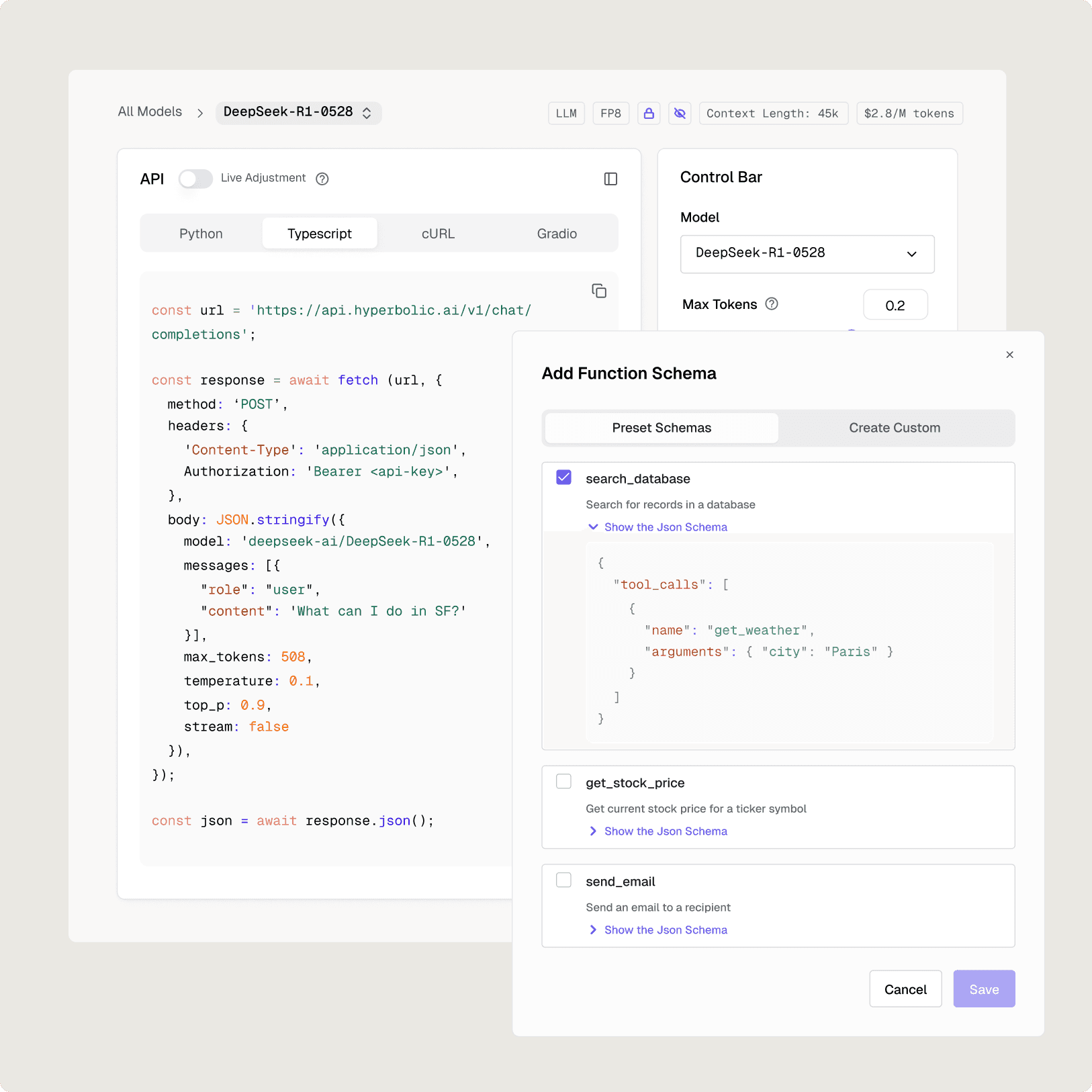
Hyperbolic’s serverless inference platform curates leading models based on benchmarks and community signals, presenting them in a structured library that enables discovery, comparison, and experimentation in minutes.
My Role
I defined the product architecture and interaction system for model discovery and inference, working closely with engineers to align the UI with underlying API and system constraints.


Designing the Structural Model
Serving models at scale requires orchestrating discovery, evaluation, interaction, and integration across a fast-moving open-source ecosystem.
Rather than treating inference as a single endpoint, I modeled it as a lifecycle that spans model selection, experimentation, and production use.
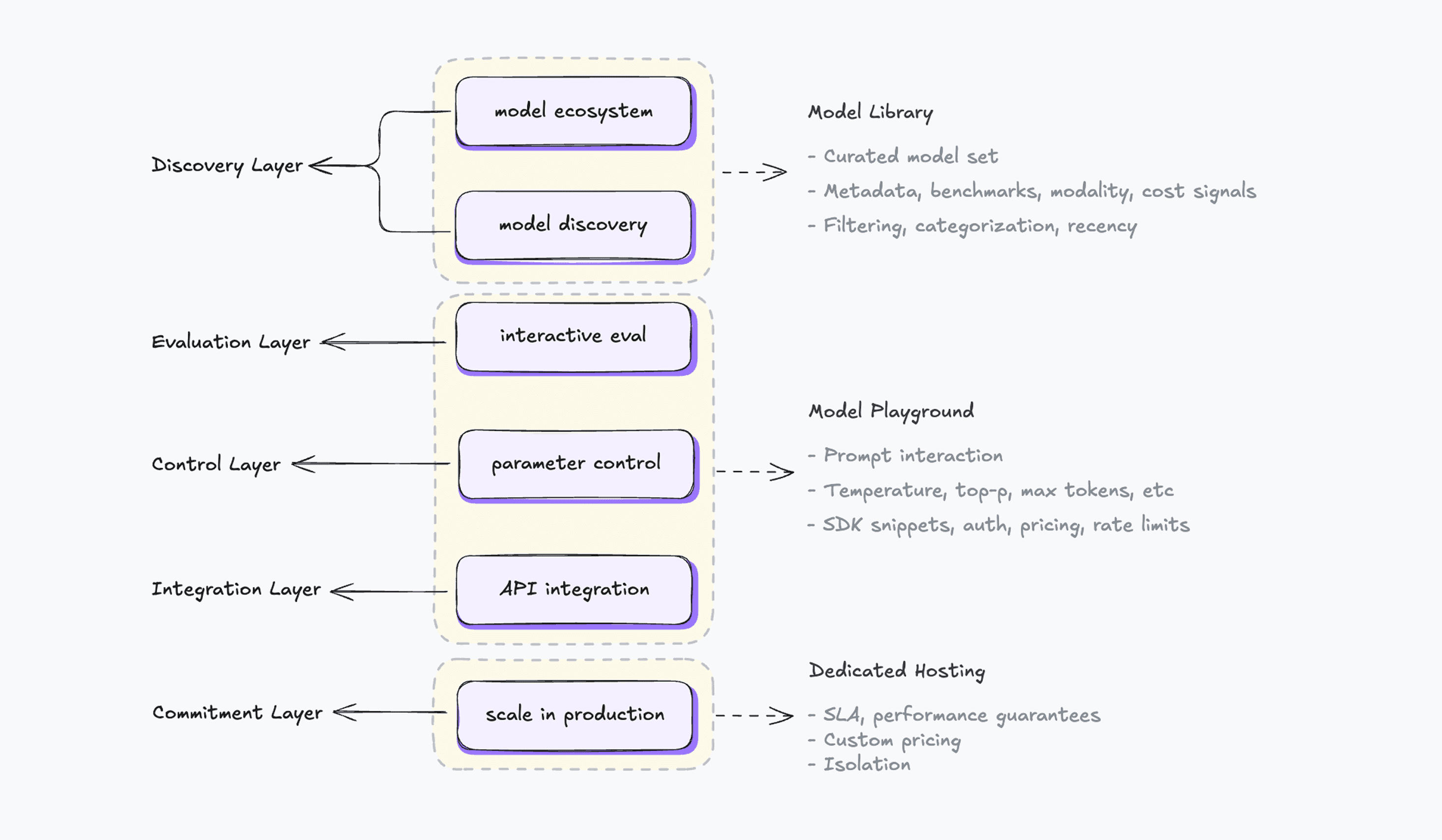
Once the inference system’s skeleton was in place, the next challenge was to guide users toward the right model for their specific use case.
Designing the Decision Model
Inference users are typically AI startups and application builders who are either cost-conscious or need fine-grained control through domain-specific tuning.
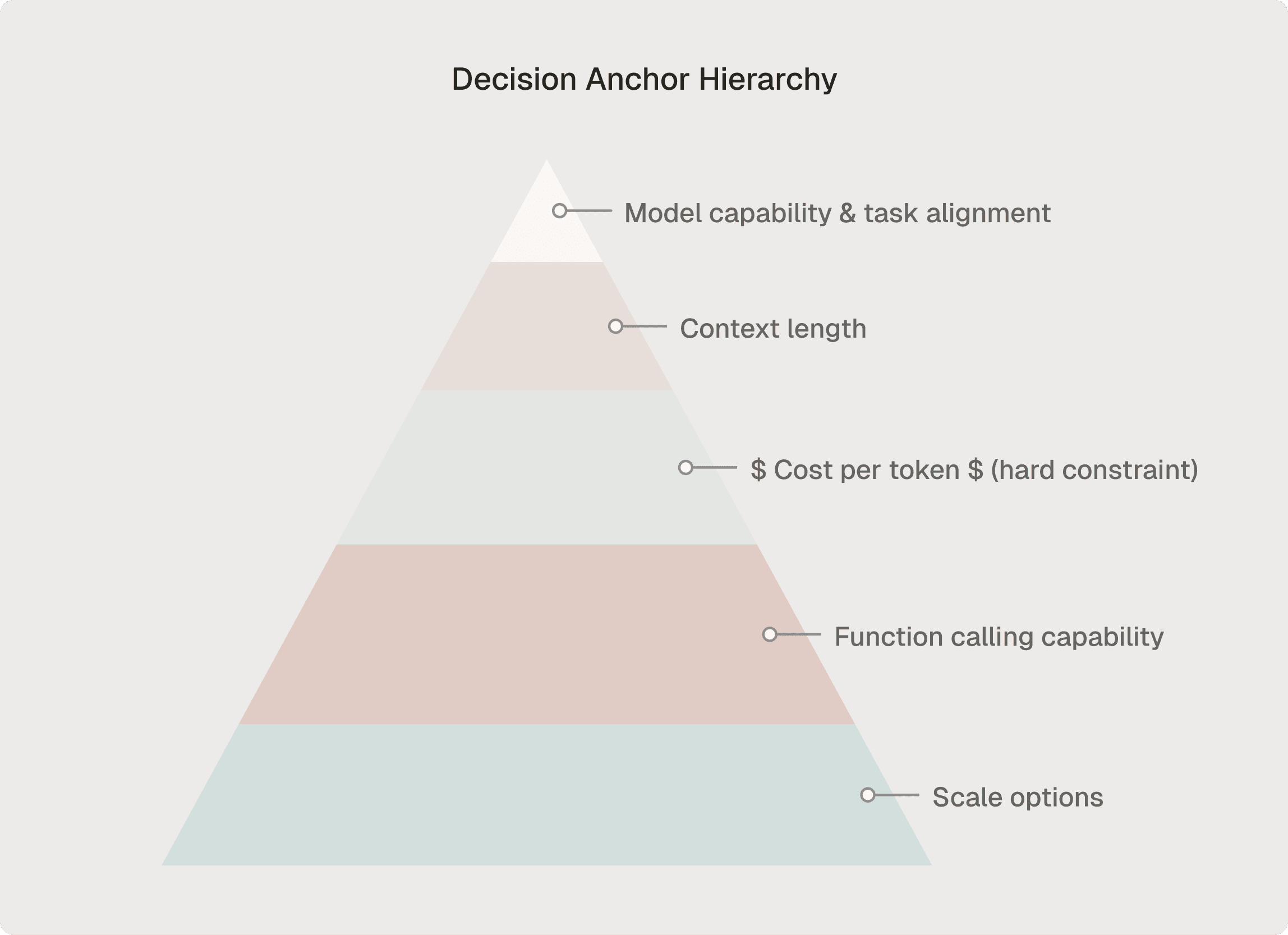
Their primary decisions center on whether an open-source model can match closed-source performance for a given task, and how easily it can be evaluated in practice.
The decision anchor hierarchy informed my design to prioritize fast model discovery and experimentation.
Design Evolution
1
Early Prototype
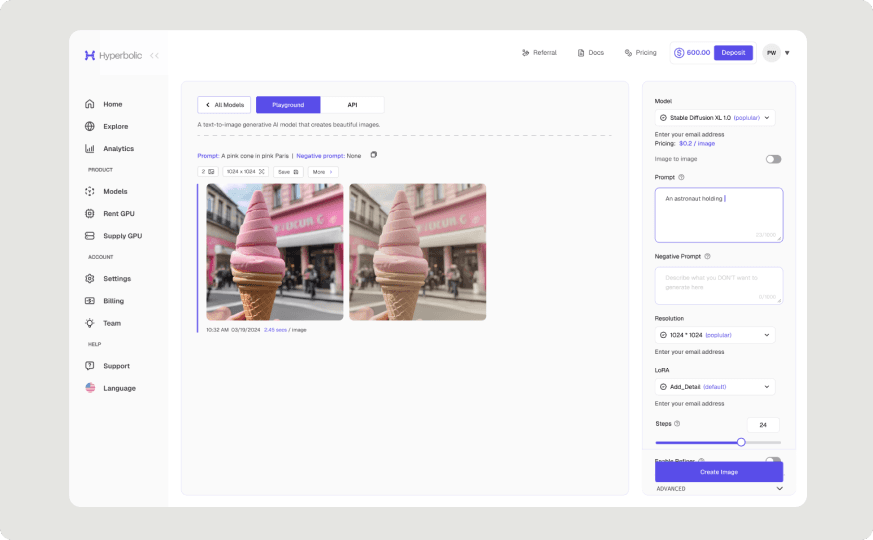
We initially led with a chat-first interface, with the API hidden behind a secondary action. Early interviews revealed confusion: users read the product as a chat app rather than a serverless inference service.
2
API Driven UI
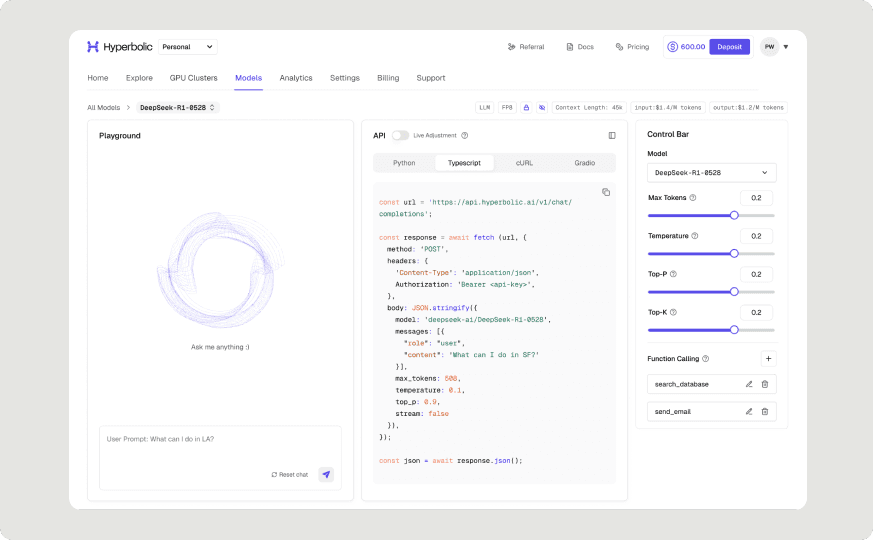
To correct that, we rebalanced the interface so chat, API, and controls shared the primary surface. This improved clarity, but surfaced a new question: when evaluating model quality, do users actually want to engage with the API in depth?
3
3-Panel Structure Iteration
As usage patterns emerged, a clearer mental model took shape. We evolved the layout into a flexible 3-panel system that lets users shift focus between exploration, configuration, and integration as their needs change.
Final Solution
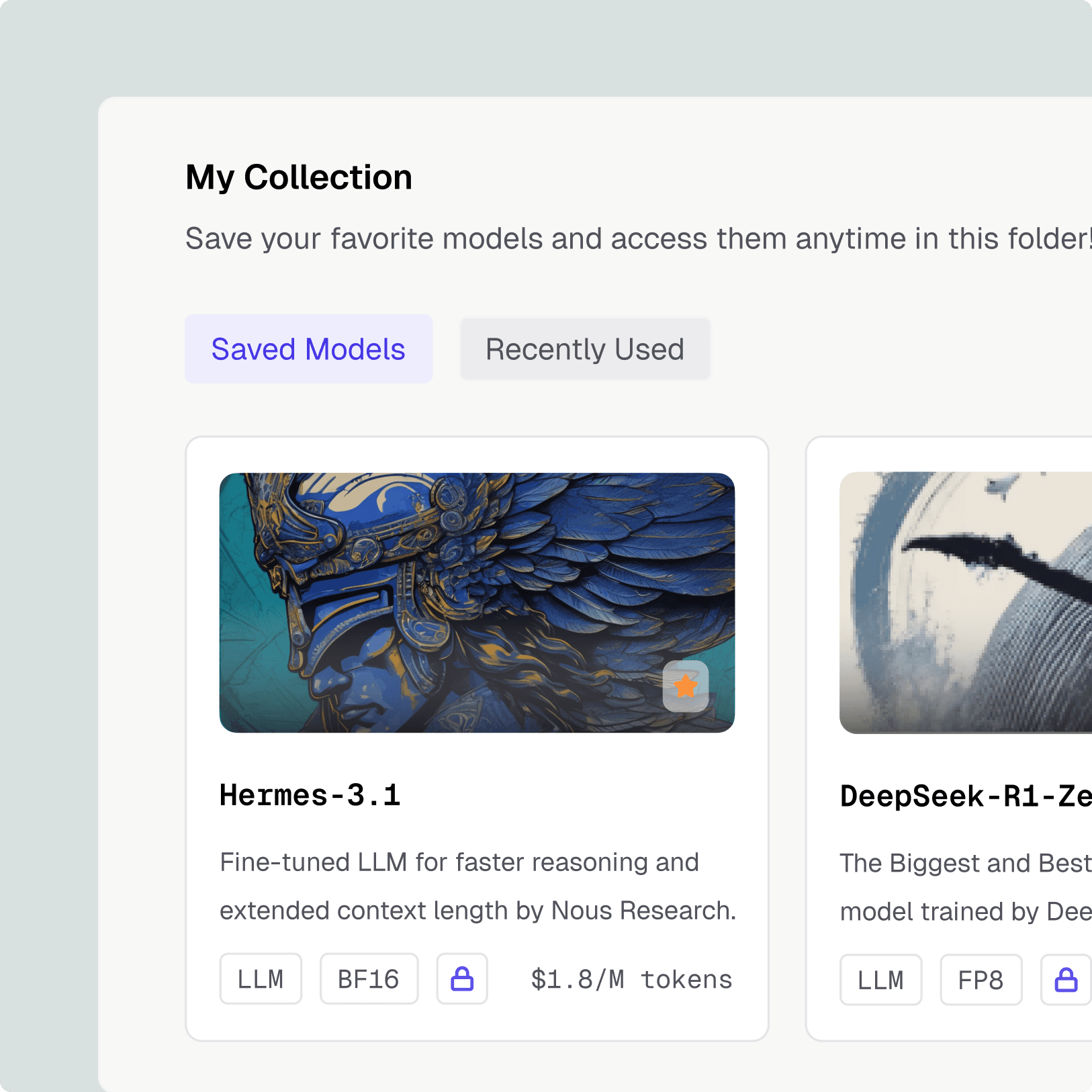
Scannable Model Metadata
Fine-Grained Model Control
Expose generation parameters and system-level controls so users can evaluate fit through direct interaction.